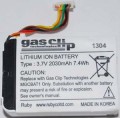
Lightweight and durable, this multi-gas detector detects combustible gases (LEL), hydrogen sulfide (H2S), carbon monoxide (CO), and oxygen (O2). In addition, this detector operates with the pump on for 52 hours continuously and features a simple one-button operation and a large, easy-to-read screen.
Lightweight and durable, this multi-gas detector detects combustible gases (LEL), hydrogen sulfide (H2S), carbon monoxide (CO), and oxygen (O2). In addition, this detector operates with the pump on for 52 hours continuously and features a simple one-button operation and a large, easy-to-read screen.
 Description
 Specifications
 Gas Detectors
 Included
 Resources
 Accessories
 Ask an Expert
 Customer Reviews
This multi-gas detector with a built-in pump runs 52 hours continuously on a single charge with the pump on. It detects hydrogen sulfide (H2S), carbon monoxide (CO), combustible gases (LEL) and oxygen (O2), and draws samples from up to 75 ft (23 m) away. The infrared LEL sensor is immune to poisons and only needs calibration once a year.
Features
| Gases | H2S: 0 to 100 PPM (0.1 PPM Increments) CO: 0 to 500 PPM (1 PPM Increments) Combustible gas: 0 to 100% LEL (0.1% LEL Increments) O2: 0 to 30% vol. (0.1% vol. Increments) |
| Tests | Full-function self-test upon activation Sensors, battery and circuitry tests run continuously |
| Alarms | Visual, vibrating and audible (minimum 95 db) Low, High, STEL, TWA and OL, Pump |
| Temperature | -4 to 122°F (-20 to 50°C) |
| Humidity | 5 to 100% RH non-condensing |
| Ratings | EMC Directive 2004/108/EC and IP67 |
| Battery Life | 52 hours (continuous, pump on) |
| Weight | 12.4 oz (352 g) |
| Dimensions | 5.7 x 3.0 x 1.5" (147 x 78 x 38.3 mm) |
| Sensor Type | H2S, CO and O2: Plug-in electrochemical cell Combustible (LEL): Plug-in infrared (IR) |
| Pump Draw | Samples from up to 75 ft (23 m) |
| Sample Delay Time | Less than 1 second per 1 ft (0.3 m) with 1/8" ID tubing |
| Gas Inlet | 1/8" stainless steel barbed fitting |
| LEDs | 4 Red alarm bar LEDs Yellow back-light (activated on button press) Red back-light (activated on alarm condition) Yellow maintenance notification LED |
| Display | High viewing angle alphanumeric liquid crystal display (LCD) |
| Logs | 25 bump tests 25 events 25 calibrations Continuous 1-second data logging (typical capacity >2 months) |
| Certifications and Approvals | CSA: CSA 14.2696027 Intrinsically safe Class I, Division 1, Groups A, B, C and D, T4 Ex ia IIC T4 Ga Class I, Zone 0, AEx ia IIC T4 Ga -20°C ≤ Ta ≤ +50°C; 3.8 V DC nominal ANSI/ISA 12.13.01-2000 C22.2 No. 152-M1984 IECEx: IECEx CSA 14.0029 II 1 G Ex ia IIC Ga -20°C ≤ Ta ≤ +50°C IEC 60079-0:2011 Edition: 6.0 IEC 60079-11:2011 Edition: 6.0 ATEX: Sira 14ATEX2120 II 1 G Ex ia IIC T4 Ga -20°C ≤ Ta ≤ +50°C EN 60079-0:2012/A11 EN 60079-11:2012 EN 60079-26:2007 UKCA: CSAE 21UKEX2475 II 1 G Ex ia IIC T4 Ga -20°C ≤ Ta ≤ +50°C EN 60079-0:2018 EN 60079-11:2012 |
| Charge Time | 4 to 6 hours |
| Recommended Calibration Frequency | 1 year |
| Warranty | 2 years |
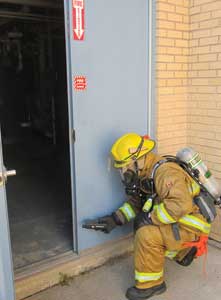 Gas detection has come a long way over the past few years. Now you can find detectors that continuously run, require little to no calibration and offer very little maintenance. This life saving tool can notify first responders and firefighters of a danger as soon as they walk through a door. Since exposure to gas can affect firefighters rapidly, this is a must have tool to accompany on any emergency call.
Portable gas detectors are used to monitor the atmosphere around an emergency professional and can be worn on clothing, attached to a belt or a backpack. These units are battery operated and transmit warnings via audible and visible signals when gases reach dangerous levels. Gas detectors can be used to identify combustible, flammable and toxic gases, and oxygen depletion depending on the need.
There are essentially two types of gas detectors: a single gas detector that is equipped to detect any single-gas hazard, or a multi-gas detector that is usually equipped with LEL (lower explosive limit), O2 (oxygen), CO (carbon monoxide) and H2S (hydrogen sulfide) sensors. This will simultaneously monitor several gases and combustibles.
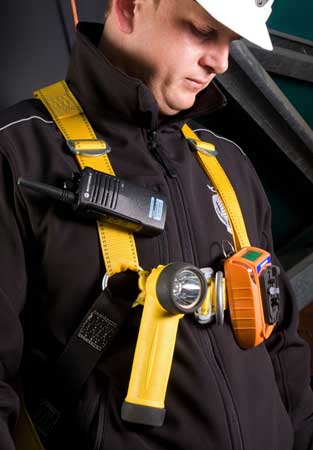
Some common applications used in emergency situations are:
Gas detectors that can read LEL should be used to determine where the hot zone is. Any LEL reading on a detector indicates the presence of gas and a potential hazard. Using these meters in emergency situations can be the difference between life and death.
Personal gas detectors have gotten a lot smaller over the years but the need is greater than ever. Advancements in technology have made these tools economical for all first responders, emergency personnel and fire fighters to have on every emergency call.
Click on a category to view a selection of compatible accessories with the Gas Clip MGC-IR-PUMP Multi-Gas Detector with pump, H2S/CO/O2/LEL.


| Gases | H2S: 0 to 100 PPM (0.1 PPM Increments) CO: 0 to 500 PPM (1 PPM Increments) Combustible gas: 0 to 100% LEL (0.1% LEL Increments) O2: 0 to 30% vol. (0.1% vol. Increments) |
| Tests | Full-function self-test upon activation Sensors, battery and circuitry tests run continuously |
| Alarms | Visual, vibrating and audible (minimum 95 db) Low, High, STEL, TWA and OL, Pump |
| Temperature | -4 to 122°F (-20 to 50°C) |
| Humidity | 5 to 100% RH non-condensing |
| Ratings | EMC Directive 2004/108/EC and IP67 |
| Battery Life | 52 hours (continuous, pump on) |
| Weight | 12.4 oz (352 g) |
| Dimensions | 5.7 x 3.0 x 1.5" (147 x 78 x 38.3 mm) |
| Sensor Type | H2S, CO and O2: Plug-in electrochemical cell Combustible (LEL): Plug-in infrared (IR) |
| Pump Draw | Samples from up to 75 ft (23 m) |
| Sample Delay Time | Less than 1 second per 1 ft (0.3 m) with 1/8" ID tubing |
| Gas Inlet | 1/8" stainless steel barbed fitting |
| LEDs | 4 Red alarm bar LEDs Yellow back-light (activated on button press) Red back-light (activated on alarm condition) Yellow maintenance notification LED |
| Display | High viewing angle alphanumeric liquid crystal display (LCD) |
| Logs | 25 bump tests 25 events 25 calibrations Continuous 1-second data logging (typical capacity >2 months) |
| Certifications and Approvals | CSA: CSA 14.2696027 Intrinsically safe Class I, Division 1, Groups A, B, C and D, T4 Ex ia IIC T4 Ga Class I, Zone 0, AEx ia IIC T4 Ga -20°C ≤ Ta ≤ +50°C; 3.8 V DC nominal ANSI/ISA 12.13.01-2000 C22.2 No. 152-M1984 IECEx: IECEx CSA 14.0029 II 1 G Ex ia IIC Ga -20°C ≤ Ta ≤ +50°C IEC 60079-0:2011 Edition: 6.0 IEC 60079-11:2011 Edition: 6.0 ATEX: Sira 14ATEX2120 II 1 G Ex ia IIC T4 Ga -20°C ≤ Ta ≤ +50°C EN 60079-0:2012/A11 EN 60079-11:2012 EN 60079-26:2007 UKCA: CSAE 21UKEX2475 II 1 G Ex ia IIC T4 Ga -20°C ≤ Ta ≤ +50°C EN 60079-0:2018 EN 60079-11:2012 |
| Charge Time | 4 to 6 hours |
| Recommended Calibration Frequency | 1 year |
| Warranty | 2 years |
Gas detection has come a long way over the past few years. Now you can find detectors that continuously run, require little to no calibration and offer very little maintenance. This life saving tool can notify first responders and firefighters of a danger as soon as they walk through a door. Since exposure to gas can affect firefighters rapidly, this is a must have tool to accompany on any emergency call.
Portable gas detectors are used to monitor the atmosphere around an emergency professional and can be worn on clothing, attached to a belt or a backpack. These units are battery operated and transmit warnings via audible and visible signals when gases reach dangerous levels. Gas detectors can be used to identify combustible, flammable and toxic gases, and oxygen depletion depending on the need.
There are essentially two types of gas detectors: a single gas detector that is equipped to detect any single-gas hazard, or a multi-gas detector that is usually equipped with LEL (lower explosive limit), O2 (oxygen), CO (carbon monoxide) and H2S (hydrogen sulfide) sensors. This will simultaneously monitor several gases and combustibles.
Some common applications used in emergency situations are:
Gas detectors that can read LEL should be used to determine where the hot zone is. Any LEL reading on a detector indicates the presence of gas and a potential hazard. Using these meters in emergency situations can be the difference between life and death.
Personal gas detectors have gotten a lot smaller over the years but the need is greater than ever. Advancements in technology have made these tools economical for all first responders, emergency personnel and fire fighters to have on every emergency call.
Click on a category to view a selection of compatible accessories with the Gas Clip MGC-IR-PUMP Multi-Gas Detector with pump, H2S/CO/O2/LEL.